
Left Brain Rules
Increasingly, we're using the grasping part of our brain

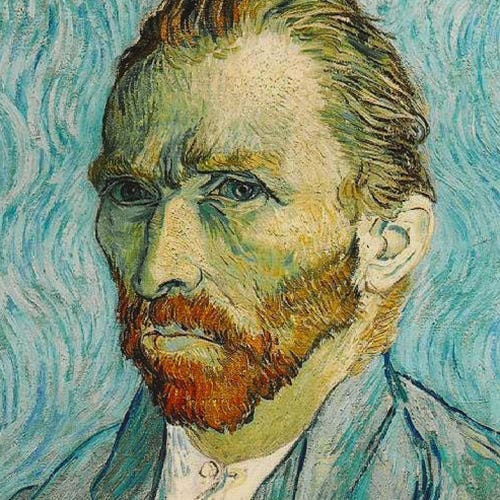
“Life is probably round,” said Van Gogh.
The great Russian novelist Arthur Koestler agreed, referring to “the nostalgia of things to become spheres.” Much of western history is a love affair with the sphere, and circles and cycles generally: the end is my beginning, and the beginning my end. Perhaps no wonder: straight lines aren’t to be found in the natural world. Individuals and cultures not obsessed with a mechanical viewpoint (machines tend to be rectilinear) see cycles everywhere. The Earth itself is, of course, a sphere, and the celestial objects in the night sky seem to trace circular or elliptical orbits. Space-time is curved.
If there’s a return in human history as well, we’re left with a nagging question. If human history is cyclical, why can’t we see this? In a culture obsessed with technology and science, we should be better empiricists. We’ve got troves of hyper intelligent data scientists. We should notice the roundness of nature, and the cycles in our own lives and in our history.
Modern lateralization research comes to the rescue—or at least, it is one intriguing possibility. We have, says McGilchrist, come to see ourselves and the world around us as machinery. As mentioned above, he marshals an impressive body of experimental studies and evidence to the conclusion that we—or at least the western world—have not just a pronounced left hemisphere dominance but indeed, a “left hemisphere” view of reality. The Enlightenment kicked it off and, discounting the brief period of Romanticism in the early nineteenth century, it’s even more true today. McGilchrist is sometimes gently dismissed as trafficking in metaphors rather than evidence, but he’s rarely dismissed out of hand. He thinks we’re in a left hemisphere world quite literally.
Until recently, studies of differences between the two hemispheres of the human brain, so-called “laterality research,” have been stigmatized by the neuroscientific community because they’ve been taken up by pop culture.
